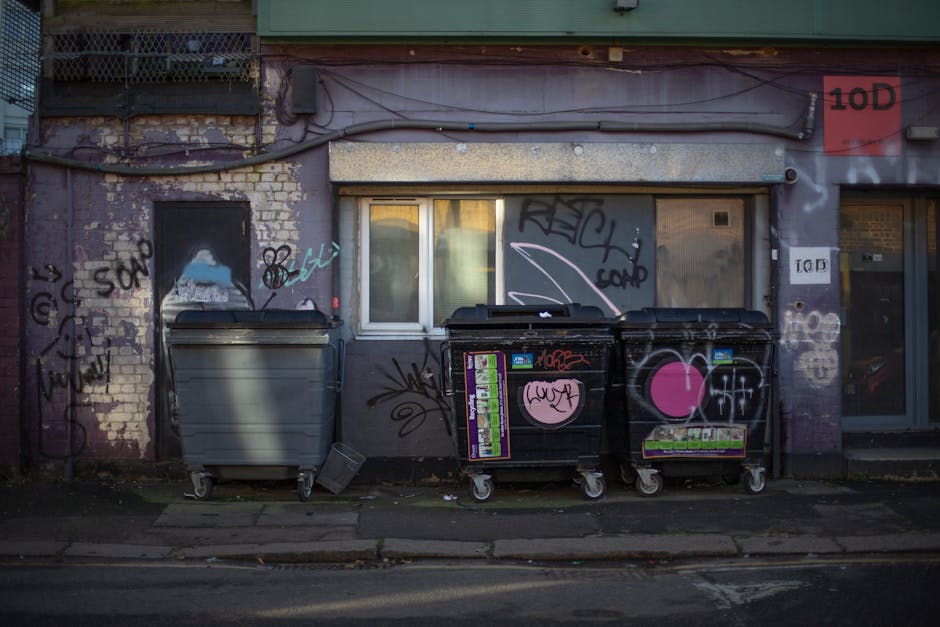
Avoid Bulky Waste Hassles in Gipsy Hill Flats
If you live in a flat in Gipsy Hill, you already know the small logistics can become the big problem. A sofa that will not fit in the lift. A mattress wedged in a narrow stairwell. A broken wardrobe waiting by the door because everyone is "doing it later." That is exactly where Avoid Bulky Waste Hassles in Gipsy Hill Flats becomes more than a tidy-up phrase. It is about making sure bulky items leave your property without awkward delays, neighbour complaints, access issues, or last-minute panic.
Truth be told, bulky waste in flats is rarely just about rubbish. It is about timing, access, shared spaces, building rules, and getting the removal method right first time. In a place like Gipsy Hill, where many homes involve stairways, communal entrances, controlled access, and limited parking, a simple item can turn into a messy half-day if you do not plan it properly.
In this guide, you will find practical ways to handle bulky waste in flat living, what to watch out for, how to choose the right approach, and how to avoid the usual headaches. You will also find a checklist, a comparison table, and real-world guidance that helps whether you are clearing one item or several rooms.
Table of Contents
- Why Avoid Bulky Waste Hassles in Gipsy Hill Flats Matters
- How Avoid Bulky Waste Hassles in Gipsy Hill Flats Works
- Key Benefits and Practical Advantages
- Who This Is For and When It Makes Sense
- Step-by-Step Guidance
- Expert Tips for Better Results
- Common Mistakes to Avoid
- Tools, Resources and Recommendations
- Law, Compliance, Standards, or Best Practice
- Options, Methods, or Comparison Table
- Case Study or Real-World Example
- Practical Checklist
- Conclusion
- Frequently Asked Questions
Why Avoid Bulky Waste Hassles in Gipsy Hill Flats Matters
Bulky waste in flats creates a different set of problems from a typical house. In a terraced or semi-detached home, you may have side access, a driveway, or space to stage items. In a flat, the route out can be the challenge. The item itself may be manageable. The awkward bit is usually the journey through the building.
Why does this matter so much? Because even one poorly planned removal can affect everyone in the block. Corridors get blocked. Lift doors stay open. Neighbours have to step around a mattress leaning in the hall. And if you live near a busy road or in an older building, timing becomes even more sensitive. At 8 a.m. on a weekday, nobody wants furniture scraping down the stairs while someone is rushing out with a pram. Let's face it, that never ends well.
Avoiding bulky waste hassle is also about protecting the condition of the property. Heavy items can mark walls, chip paint, damage stair treads, scratch floors, and create complaints with landlords or managing agents. A rushed lift-out can cost more than the removal itself if repairs are needed afterwards. So the question is not just "how do I get rid of this?" It is also "how do I do it without creating a second problem?"
For many residents, the goal is simple: remove the item with minimal disruption, a clear plan, and no drama. That sounds ordinary. In flat living, ordinary is excellent.
If you are also sorting out wider clearance needs, it can help to look at professional house clearance options as part of the planning stage, especially where several items need to go together rather than one at a time.
How Avoid Bulky Waste Hassles in Gipsy Hill Flats Works
There is no single magic method. In practice, avoiding bulky waste problems in a flat usually means choosing the right removal route, preparing the item properly, and making the building route as smooth as possible.
The basic process often looks like this:
- Identify the item or items. Measure them if needed, and check whether they can be dismantled safely.
- Work out the access route. Think about lifts, stairwells, parking, shared hallways, and whether anything might obstruct the move.
- Choose the disposal method. Depending on the item, this may mean collection, man-and-van support, a scheduled clearance, or a council route where appropriate.
- Prepare the flat and communal areas. Clear a path, protect corners if necessary, and let neighbours or the building manager know if the move could be disruptive.
- Remove, load, and dispose responsibly. Good operators separate reusable items, recyclable materials, and general waste where possible.
The best outcomes usually come from planning rather than brute force. A sofa that looks impossible may move easily once the legs and feet are removed. A bed frame that seems enormous may be manageable in parts. On the other hand, forcing something through a narrow landing "because it should fit" is how walls get marked and tempers get raised.
In a flat setting, the logistics are often the real product. Not just disposal. Timing, access, and care matter just as much.
If you need a broader support service for a mixed load, you may find it helpful to review waste removal services alongside your bulky-item plan so the whole job is handled in one go rather than in pieces.
Key Benefits and Practical Advantages
When bulky waste is handled well, the benefits are immediate. The space clears faster, the building stays tidy, and you avoid the small but very real stress that builds up when an unwanted item sits in the way for days.
Here are the most practical advantages:
- Less disruption to neighbours because the removal is planned and swift.
- Reduced risk of damage to walls, doors, lifts, and flooring.
- Better use of time since you are not doing repeated trips or waiting around for a vague arrangement to happen.
- Cleaner communal areas which matters in blocks where shared space is limited.
- More certainty around what happens to the item after collection, especially if it can be sorted for reuse or recycling.
There is also a mental benefit people do not talk about enough. Once the bulky item is gone, the flat feels different. You notice the extra space. The room breathes again. A corner that had been awkward for weeks becomes usable. That sense of "right, sorted now" is worth a lot, especially in compact London living.
And to be fair, bulky waste clearance is often one of those jobs that looks tiny from the outside but feels huge when you are the one living with it. One old wardrobe can dominate a hallway like it pays the rent.
For residents comparing broader support options, commercial waste removal services can also be relevant where a flat is part of a rental portfolio, managed building, or mixed-use property and the waste load is larger than a normal household clearance.
Who This Is For and When It Makes Sense
This approach is for anyone in a flat who needs to dispose of large, awkward, or heavy items without creating building headaches. That includes tenants, leaseholders, landlords, letting agents, housing managers, and anyone helping a relative downsize.
It makes sense when:
- you have a sofa, mattress, bed base, wardrobe, table, or white goods to remove;
- the item will not fit easily through the usual exit route;
- you do not want to block communal areas with waste bags or furniture;
- the item is too heavy or awkward to move safely on your own;
- you need the removal done around work, family routines, or building access restrictions;
- you are clearing a flat before a move-out, refurbishment, or tenancy change.
This is also the sensible route if the item is more than one person should lift. Many people underestimate the weight or shape of old furniture. A sofa, especially a bulky corner unit, is rarely as simple as it looks in a photo. The same goes for fridge-freezers and washing machines. They are not just heavy; they are awkward, with edges and balance points that can catch you out.
If you are dealing with a deceased estate, a probate clear-out, or an end-of-tenancy situation, a more structured service may be the calmer option. In those situations, a full probate house clearance approach can be more appropriate than trying to piece things together under pressure.
Step-by-Step Guidance
Here is a practical process you can follow. It is simple enough, but the small details matter.
1. List exactly what needs to go
Write down each item. Be specific. "Old furniture" is not enough. "Two-seat sofa, double mattress, broken TV unit, one chest of drawers" is much more useful. If there are a few separate items, list them in the order they will be taken out.
2. Measure the awkward bits
Check the width of doors, hallways, lifts, and stair bends. A tape measure saves arguments later. If an item can be dismantled, decide that before anyone starts dragging it into the hallway.
3. Decide whether to dismantle
Some items are easier to move in sections. Bed frames, wardrobes, and modular shelving are common examples. But do not dismantle something if you are not confident it can be reassembled or handled safely. A loose screw lost under the radiator is a classic little nuisance. Tiny, but annoying.
4. Clear the route
Move shoes, baskets, prams, and small furniture away from the path. In flat blocks, a clear route is often the difference between a smooth lift and a messy one. If the building has a lift, check whether it is suitable for the item size and whether it needs protection.
5. Protect corners and surfaces
Use blankets, cardboard, or temporary protective covering where appropriate. You are trying to avoid scuffs on painted walls and marks on door frames. It is a small effort that saves a lot of regret.
6. Confirm access and timing
Think about when the collection will happen. Morning may be easier for parking and access. Late evening may reduce disruption, but some buildings have quiet hours or restrictions. If someone else needs to unlock a gate, lift, or shared entrance, make sure that is arranged.
7. Remove in the safest order
Take out the simplest and smallest items first if that creates space. Keep clear communication if more than one person is carrying. Slow is often faster than chaotic. That sounds like a contradiction, but it really is not.
8. Check the space afterwards
Look for stray screws, dust, and any marks that need attention. In rented or managed buildings, this final check can save a lot of follow-up stress.
If your clear-out also involves a single difficult item, such as a bulky sofa or a mattress, it may be worth reviewing single item collection support rather than organising a larger removal than you actually need.
Expert Tips for Better Results
Most bulky-waste problems in flats are predictable. That is the good news. Here are the things that tend to make the biggest difference.
- Measure first, move second. It sounds obvious, but a surprising number of issues come from guesswork.
- Dismantle where sensible. Flat-packed in reverse is usually easier than forcing whole furniture through a narrow gap.
- Schedule around the building. If there is lift access, loading bay access, or permit-sensitive parking nearby, plan for it.
- Keep the shared area clean. Even a short delay can feel like a nuisance to neighbours if waste is left in the corridor.
- Separate reusable items early. If something is still usable, keep it apart from damaged waste. It can simplify disposal and reduce unnecessary landfill.
- Use the right help for the job. One item is not always a "full clearance" job, and a full flat clear-out is not always a "we'll just wing it" job. Matching service to need matters.
One local reality worth keeping in mind: in older Gipsy Hill blocks, stairwells and entrance corners can be tighter than they look at first glance. A sofa can make it past the first doorway and then suddenly, no, it will not. That is when the calm route wins.
Another small but useful tip: if the item is dusty, damp, or has a strong odour, wrap or bag it first where possible. Nobody wants a musty mattress scent hanging around a common landing for longer than necessary. Not exactly glamorous, but very real.
Common Mistakes to Avoid
A lot of bulky waste hassle comes from avoidable mistakes. Some are simple. Some are the sort of thing that only becomes obvious once you are already halfway down the stairs.
- Leaving items in communal areas too long. This creates friction with neighbours and may breach building rules.
- Assuming everything can be lifted intact. Many items need partial dismantling.
- Forgetting about parking and access. A van that cannot stop nearby turns a quick job into a long one.
- Not checking item weight. White goods and solid wood furniture are often heavier than expected.
- Ignoring shared building etiquette. The stairwell is not a storage room, however briefly you think it might be.
- Mixing reusable items with general waste. This can reduce flexibility and make sorting harder later.
There is also a softer mistake: waiting too long. Once a bulky item has sat in the flat for weeks, it tends to become part of the furniture in the worst possible way. You stop seeing it, but you still trip over it. That is usually the point when people decide they are done with it.
Plan early, and the whole thing feels lighter. Honestly, that is half the battle.
Tools, Resources and Recommendations
You do not need a van full of equipment to handle bulky waste properly, but a few basic tools can make the job safer and cleaner.
- Tape measure for doorways, item dimensions, and lift clearance.
- Protective gloves to reduce the risk of cuts, splinters, and dirt.
- Furniture sliders or blankets to protect floors and help with short moves.
- Strong bags or wrap for loose parts, screws, cushions, or broken components.
- Basic screwdriver or Allen key set if the item can be dismantled safely.
- Labels or notes to identify what stays, what goes, and what is being kept for recycling or reuse.
For bigger jobs, the most useful resource is often not a tool at all but a structured service that can handle removal, loading, and disposal together. If you are comparing options, it helps to think in terms of fit: do you need one-item removal, multi-item removal, or a full property clearance? That choice changes everything.
You can also explore office clearance support if the bulky waste is coming from a home office, managed workspace, or mixed-use setting, because the removal pattern is often a bit different from household waste.
Law, Compliance, Standards, or Best Practice
Bulky waste disposal is not just about convenience. In the UK, waste should be handled responsibly, and you should be careful about who removes it and where it ends up. If you hand waste to an unlicensed operator, the problem can come back to you. That is a risk worth avoiding.
In practice, best practice usually means:
- using a reputable service for collection and disposal;
- keeping clear records or confirmations where relevant, especially for landlords or managing agents;
- avoiding fly-tipping or leaving items beside communal bins without permission;
- checking building rules if you live in a managed block;
- treating shared areas with care so access remains safe for everyone.
If you are a tenant, it is sensible to check your tenancy terms before arranging a removal that affects communal spaces or involves temporary storage in a shared area. If you are a landlord or agent, you will usually want the process to be clear, tidy, and documented. Nothing dramatic. Just properly handled.
There may also be local collection rules or booking expectations that apply to certain bulky items. Those details can vary, so it is better to confirm the current arrangement rather than assume last year's process still applies. A five-minute check can save a headache later.
Options, Methods, or Comparison Table
Different situations call for different approaches. Here is a simple comparison that can help you decide.
| Method | Best for | Strengths | Limitations |
|---|---|---|---|
| DIY move and disposal | Very small, manageable items | Low direct cost, full control | Time-consuming, higher risk of damage or injury, not ideal for heavy items |
| Single-item collection | One bulky object such as a sofa or mattress | Simple, efficient, less disruption | May not suit mixed waste loads |
| Multi-item removal | A few large items from one flat | Good balance of convenience and cost efficiency | Needs better planning and access coordination |
| Full clearance service | End-of-tenancy, probate, or major declutter jobs | Most thorough, least hassle, handles mixed contents | More involved than a simple collection if you only have one item |
If you are unsure which route fits, ask yourself one straightforward question: do I want this gone with the least possible fuss, or do I just want to minimise spend for a very small job? That answer usually points you in the right direction.
For properties where waste is part of a broader refurbishment or move-out process, property clearance services can be more practical than arranging several separate collections.
Case Study or Real-World Example
Picture a typical Gipsy Hill flat: two bedrooms, a narrow hallway, one lift that is just a bit too small for anything awkward, and a landlord needing the place cleared before new tenants move in. The main problem is not the number of items. It is the layout.
In one realistic scenario, the largest items are a bed base, a wardrobe, and an old sofa. The flat owner first measures the hallway and the stairwell bend. The wardrobe turns out to be too wide to move intact, so it is dismantled. The sofa is manageable once the feet are removed. The bed base is lifted in two parts. Nothing heroic. Just careful.
The useful bit is what happens before removal day. The route is cleared. Loose items are packed away. A neighbour is told there may be some brief movement through the landing. The collection happens in one clean run, with no item left blocking the stairs and no one trying to edge around a half-moved bookshelf at lunch time.
That is the difference between a hassle and a smooth job. It is rarely about force. It is about planning and choosing the right way to get the item out. A bit boring, maybe. But very effective.
Practical Checklist
Use this quick checklist before arranging bulky waste removal from a flat in Gipsy Hill.
- Have I listed every item that needs to go?
- Have I measured the widest points and checked the route out?
- Can anything be safely dismantled to make removal easier?
- Have I checked access, parking, and any lift restrictions?
- Have I cleared the hallway, entrance path, and any communal pinch points?
- Do I know whether I need one-item removal or a larger clearance?
- Have I separated reusable items from damaged waste?
- Have I confirmed the building's rules or the landlord's expectations?
- Do I have someone available if a second pair of hands is needed?
- Have I arranged the removal at a time that will cause the least disruption?
If you can tick most of those off, you are already ahead of the game. Really. Most bulky waste problems start with the things that were not checked, not the item itself.
Expert summary: The easiest way to avoid bulky waste hassles in a Gipsy Hill flat is to plan the route, match the removal method to the item, and treat communal access with care. That simple trio saves time, stress, and a lot of awkward back-and-forth on the day.
Conclusion
Bulky waste in flats does not need to turn into a mini-crisis. Once you understand the access, timing, and disposal options, the job becomes much more manageable. In Gipsy Hill, where flat layouts and shared spaces can make even basic removals a little fiddly, a calm plan is worth more than brute effort every time.
Think in practical terms: measure, prepare, choose the right method, and keep the shared environment tidy. Whether you are dealing with a single sofa or a longer flat clearance, the goal is the same. Keep it simple, keep it safe, and keep it respectful to the building and the people around you.
Get a free quote today and see how much you can save.
And if you are looking at a larger project, you may also want to explore broader support like garage clearance for overflow storage areas, or removals support when the job is tied to a move. Sometimes the best fix is simply choosing the service that fits the real situation.
One good plan now can save a whole lot of fuss later. That is usually the way it goes.
Frequently Asked Questions
What is the easiest way to remove bulky waste from a flat?
The easiest way is usually to measure the item, check the access route, and use a collection method that matches the size of the job. For one large item, a single-item collection is often the simplest route. For several items, a structured clearance is usually smoother.
Can I leave bulky waste in a communal hallway while I wait for collection?
Usually, no. Shared hallways need to stay clear for safety and neighbour access. Leaving items there can cause complaints, block escape routes, and may go against building rules. It is better to keep the item inside your flat until collection day.
Do I need to dismantle furniture before removal?
Not always, but it often helps. Beds, wardrobes, and large shelving units may fit more easily if taken apart. If dismantling is likely to make the move safer and reduce the risk of damage, it is usually worth doing.
How do I know whether I need a full clearance or just one-item collection?
If you only have one bulky item, a single-item collection makes sense. If you have multiple pieces, mixed waste, or a flat that needs clearing before a move or tenancy change, a full or partial clearance service is usually better.
What bulky items are hardest to remove from flats?
Sofas, wardrobe units, mattresses, fridge-freezers, and washing machines are common troublemakers. They are either awkward in shape, heavier than expected, or difficult to turn through narrow stairwells and doorways.
Is it cheaper to take bulky waste out myself?
Sometimes, but not always once you factor in time, transport, parking, and the risk of damage. DIY can work for smaller items, but it becomes less practical when the item is heavy, awkward, or hard to move safely through a flat building.
What should landlords or letting agents do before arranging clearance?
They should confirm what needs to be removed, check access, review any tenancy or building rules, and make sure the process is tidy and documented. For managed properties, keeping the route and communal areas clear is especially important.
How far in advance should I plan bulky waste removal?
As soon as possible. Even a simple removal can benefit from a bit of lead time if access is tight or if the item needs dismantling. If you have building restrictions or a move-out deadline, planning early is much safer.
What happens if my bulky item will not fit through the flat doorway?
If it will not fit intact, the usual answer is to dismantle it where safe, or use a removal method that handles awkward access. Forcing it is a bad idea. That is how doors get damaged and everyone ends up regretting the afternoon.
Are there any special concerns for flats in older London buildings?
Yes. Older buildings often have tighter staircases, narrower turns, and more delicate surfaces. That does not mean removal is difficult by default, but it does mean you should measure carefully and protect walls and floors where needed.
What if the bulky waste includes items from a probate or estate clearance?
In that case, a more organised clearance approach is usually sensible. Probate-related clearances often involve a mix of items, sentimental decisions, and timing pressures, so a structured service can make the process calmer and more efficient.
How can I make sure bulky waste is handled responsibly?
Choose a reputable service, confirm what is being removed, and avoid leaving items in shared areas or passing them to anyone who may not handle them properly. Responsible removal is as much about the method as the disposal.