Office Clearance in Gipsy Hill

Office clearance in Gipsy Hill calls for a practical, tidy approach that removes unwanted items without disrupting the rest of the workspace. We handle the collection and sorting of office contents, from desks and chairs to filing units, small electrical items and mixed general waste, so the space can be returned in a cleaner and more workable condition. The service is suitable for routine downsizing, post-move emptying, refits and one-off clear-outs where the aim is to remove items carefully and responsibly.
Every office has different requirements, so our work is shaped around what is actually present on site. Some clearances involve a few surplus pieces of furniture and outdated paperwork storage, while others involve several rooms, reception areas, meeting spaces and back-office storage. A good clearance plan keeps reusable items separate from waste, helps avoid unnecessary disruption and makes it easier to deal with bulky items in a sensible order. Clear access, accurate sorting and careful loading are often the difference between an awkward job and a straightforward one.
For a commercial space, the main value of a proper clearance is that it reduces clutter while keeping the move or refurbishment process on track. We can remove items from occupied or vacant premises, and we can work around stairs, lifts and restricted access where needed. If you are planning a change in occupancy, a renovation or a full vacate, start with the items that take up the most space and then work through the smaller contents once the larger pieces have been assessed. Use the service to regain usable floor area and keep the site ready for the next stage.
What our office clearance service covers
Our office clearance work is built around the practical removal of redundant workplace items. That includes bulky furniture such as desks, meeting tables, storage cupboards and office chairs, together with loose contents that accumulate in drawers, cupboards and shared rooms. We also deal with archive-style material, broken office accessories and mixed surplus equipment where the aim is to clear the area without leaving behind the awkward pieces that are often missed in a hurried move.
The service can also suit landlords, agents and business owners who need an empty and presentable interior after a tenancy ends or a workspace changes hands. The job may involve a single suite, a floor of an office building or a smaller business unit, depending on what needs to be cleared. If there are items that should be retained, kept aside or handled separately, those decisions are best made before the loading begins so that the work stays orderly and efficient. Pricing and quotes can be discussed alongside the scope of the clearance once the main items are identified.
When you are assessing what should go, it helps to separate furniture, paperwork storage, electrical equipment and loose waste before collection day. That simple sorting step makes the work smoother and reduces the risk of useful items being mixed in with disposal material. If you are uncertain about the best way to group items, a short inventory can be enough to set the clearance out clearly. Good preparation is not about perfection; it is about making the removal sequence manageable and helping us deal with the correct items first.
Furnishings, equipment and mixed office items

Many office clearances are led by furniture removal, because desks, shelving, cupboards and conference tables are usually the most space-consuming parts of the job. We can remove items of different sizes and finishes, including flat-pack style pieces, heavier units and assembled furniture that needs to be taken out carefully. Where furniture is still in usable condition, it may be suitable for reuse or separate handling rather than being mixed directly with general waste.
Office equipment can also create a clearance challenge, especially when it has been accumulated over time. Monitors, printers, desktop units, keyboards, lead bundles and assorted accessories can be spread through several rooms and cupboards. These items need to be gathered methodically so that the clearance remains organised. A careful approach helps distinguish the equipment that belongs in the removal load from the paperwork, stationery and day-to-day supplies that should stay behind for the next occupier or the remaining team.
Some premises also contain mixed storage areas where the contents are less predictable. That might include spare chairs, old display items, filing cabinets with empty drawers, packaging, archived folders and miscellaneous stock. In these situations, it is often useful to work room by room, or storage area by storage area, so each section can be cleared in a defined sequence. Orderly sorting is particularly helpful when different categories of items are stored together, because it supports both speed and accuracy during the clearance.
Vacant offices, occupied premises and access planning
Some clearances take place in fully vacated offices, while others happen in premises that are still partly occupied. The approach is different in each case. A vacant space usually allows faster removal of large items and easier movement through rooms, whereas an occupied workplace needs more attention to access routes, staff movement and the protection of items that are staying in place. The work can be planned to avoid unnecessary interference with the day-to-day running of the business.
Access details matter because offices are often located above ground level, within managed buildings or behind shared entrances. Stairs, lifts, loading restrictions and corridor widths can all affect how the clearance is organised. When the route is clear, heavier items can be removed with less delay and the risk of scuffs or congestion is reduced. If there are items in different rooms, it is sensible to identify those locations in advance so the collection proceeds in a logical order rather than becoming repetitive and disruptive.
Before collection, it is usually enough to note what remains on site, which rooms contain the heaviest items and whether any furniture needs to be left untouched. That helps set expectations for the sequence of work and avoids confusion when the removal begins. You do not need to overcomplicate the enquiry; clear information about the spaces involved and the items to be removed is normally sufficient to shape an appropriate clearance plan.
Furniture disposal and responsible sorting

Office clearance is not just about taking items away; it is also about sorting them sensibly so they go to the right next step. Furniture disposal may be relevant when desks, chairs, cabinets and other fittings can no longer be reused in the workplace. Items in usable condition can be separated from damaged pieces, which helps keep the clearance organised and ensures that furniture is handled in a way that matches its condition.
In many offices, furniture is mixed with smaller items that create a cluttered and unfinished appearance. Loose shelving parts, pedestal drawers, display stands, side tables and surplus visitor seating are common examples. A clear sorting process helps to distinguish the substantial items from the smaller bits and pieces that often end up left behind. That matters because the objective is not merely to remove volume, but to leave the space visually and practically clear enough for whatever comes next.
Some clients prefer to keep certain items aside for internal reuse, storage or relocation to another site. If that is the case, the clearance should be planned so retained pieces are clearly separated before loading starts. This reduces handling mistakes and makes the work more efficient. A useful rule is to decide what belongs to keep, what belongs to remove and what needs a separate decision before the team arrives.
Business waste and office contents management
Office clearance often overlaps with broader business waste removal, especially when a workplace contains a combination of furniture, packaging, paperwork storage and day-to-day rubbish. Business waste removal is useful to think about where the contents are not limited to one type of item, because offices tend to accumulate a mix of materials over time. The best results usually come from treating the clearance as a structured sorting job rather than simply a single load of mixed objects.
Commercial spaces can contain a surprising range of waste streams, even when the business is small. Broken office accessories, obsolete signs, packaging from deliveries, small fittings, storage boxes and redundant stock can all appear in the same room. A well-planned clearance keeps these items organised and helps avoid unnecessary handling. If there are records, sensitive materials or items requiring special attention, they should be identified before the main removal begins so they can be dealt with appropriately.
It is often helpful to think in terms of zones: reception, workstations, storage, kitchenette and meeting areas. Each zone may contain different items and require a slightly different approach. That makes the clearance easier to coordinate and reduces the chance of forgetting smaller contents tucked into corners or cupboards. The result is a cleaner handover and a better-organised empty space, without turning the process into a prolonged disruption.
How we organise an office clearance
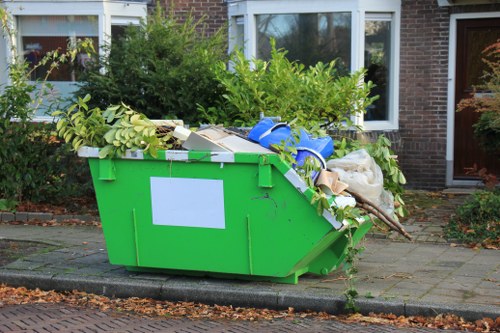
Office clearance works best when the process is straightforward from the outset. A typical job begins with identifying what is to be removed, then separating the items by room or type so the load can be taken away in a sensible sequence. The next step is lifting, carrying and loading the items carefully, especially where stairwells, lifts or shared access routes are involved. This keeps the clearance controlled and helps protect the property as well as the items being moved.
If you are preparing for a quote, a few practical details are usually enough: the type of office, the approximate amount of furniture and equipment, and whether the site is occupied or vacant. A brief description is often more useful than a long explanation, provided it captures the key pieces that need clearing. Where possible, it also helps to note any access limitations, such as tight corridors or restricted parking, so the work can be planned accurately. For a straightforward enquiry, you can request a quotation using the contact page.
There is no need to wait until everything is packed before making contact. Often the best time to arrange the clearance is when the main categories of items are already known, even if a final tidy-up is still taking place. That gives enough information to set the scale of the job while leaving room for the practical details to be confirmed later. Once the removal plan is agreed, the office can be cleared in a measured, efficient way.
Office clearance and refurbishment schedules
Office clearance is frequently tied to a refurbishment, reconfiguration or relocation timetable. In those situations, the job has to fit around other trades, building access and deadlines set by landlords or project managers. A good clearance plan supports that schedule by removing the old contents in stages where necessary and leaving the floor space ready for the next phase of work. That is especially useful when furniture, fittings and leftover storage all need to come out before improvements begin.
Sometimes the clearance also involves items that were installed or assembled specifically for the outgoing layout, such as partition-related furniture, storage runs, meeting-room tables or reception pieces. These often need to be removed in a careful order so the room can be handed over without damage. Where a project includes replacement furniture or altered room use, the existing contents should be assessed against the new layout rather than cleared at random. That keeps the job aligned with the wider plan for the building.
When timing matters, it is sensible to keep the clearance instructions focused on what must happen first. A simple sequence can prevent overlap with contractors and reduce the chances of items being moved twice. If there are pieces that should remain available until the final stage, those should be marked out clearly. Clear priorities make the whole process easier to manage and help the office move from occupied to empty without confusion.
About Gipsy Hill
Gipsy Hill is a residential area in the south London borough of Lambeth, close to the boundary with neighbouring parts of South London and built on higher ground that gives it a distinct local character. The area takes its name from the hill itself and is closely associated with the railway station that opened in the nineteenth century, helping shape its growth as a commuter suburb. Much of the surrounding landscape is made up of late Victorian and Edwardian housing, with terraces, semis and converted properties forming much of the street pattern. The district sits near several notable green spaces, including the open expanse of Crystal Palace Park and the broader network of parks and commons that define this part of London’s south-eastern edge. Its roads and residential streets connect to nearby centres such as West Norwood, West Dulwich and Crystal Palace, giving it a layered local identity rather than a single commercial focus. The area is also known for its independent shops, local pubs and community life, while the surrounding neighbourhoods retain a mix of suburban calm and city access. Architectural variety is visible in the housing stock, where original period buildings sit alongside later infill and renovations, reflecting the area’s long period of steady change rather than rapid redevelopment. This combination of elevated setting, historic rail links, green space and residential density gives Gipsy Hill a recognisable place within south London’s urban landscape.
Furniture clearance for offices and workspaces

Furniture clearance is often the most visible part of an office clearance because it transforms how a room feels once large items are gone. Furniture clearance can cover desks, task chairs, reception pieces, storage units and conference-room fittings, all of which tend to dominate the available space. When these items are removed in the right order, the room becomes easier to inspect, clean and prepare for its next use.
Different furniture types call for different handling. Lightweight pieces may be moved quickly, but heavier or awkward items often need more care, especially if they were built in place or assembled around other fittings. It can also be useful to group furniture by destination, such as reuse, removal or further sorting, so nothing is handled twice. That makes the job more efficient and reduces the chance of a room feeling half-cleared for longer than necessary.
If your office contains both furniture and smaller items, it is usually better to think about the room as a whole rather than treating every piece separately. The goal is to leave behind a coherent, workable empty space, not simply to remove a few obvious items. When the clearance is planned in that way, the finished result is easier to manage for cleaning, handover or any subsequent fit-out work.
Quotation details and the final stage of the clearance
Quotes for office clearance are normally based on a few practical factors: the amount and type of items, the access involved, the number of rooms or floors, and whether the office is occupied or already empty. Those details help set the scale of the job without creating unnecessary complexity. If there are any exceptional items, such as large meeting tables, dense archive storage or unusually restricted access, it is best to mention them early so the clearance can be priced and planned on the right basis.
During the final stage, the emphasis is on checking that the agreed items have been removed and that any separate instructions have been followed. That might include leaving behind retained furniture, keeping specific materials aside or ensuring certain rooms are completed before others. A steady finish matters because office clearances often sit within wider practical deadlines. Once the main load has gone, the remaining space is easier to clean, reconfigure or hand over.
To talk through the work and arrange the next step, use the contact page when you are ready to move forward. If you can describe the type of premises and the main contents to be cleared, we can help shape the job around your office and keep the process straightforward from the first enquiry to the final collection.