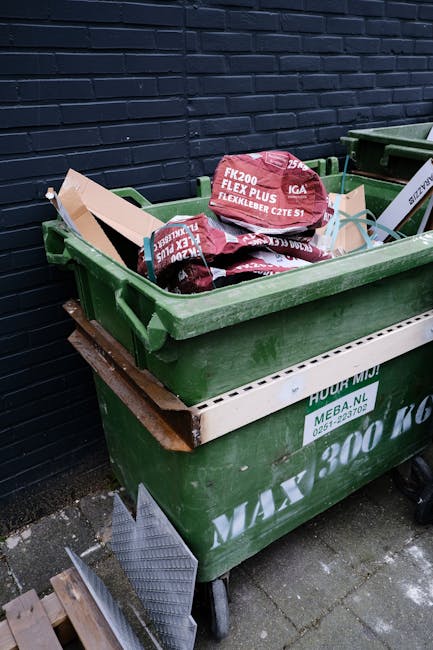
Skip-Free Clearance Permits and Lambeth Council Rules: A Practical Guide for Clearances That Go Smoothly
If you are arranging a clearance in Lambeth, the phrase Skip-Free Clearance Permits and Lambeth Council Rules can sound more complicated than it really is. In plain English, it is about making sure waste is removed legally, safely, and without causing problems on the street, on the pavement, or with neighbours. That matters whether you are emptying a flat, clearing a loft, shifting office furniture, or dealing with a bigger house clearance.
The tricky part is this: you may not need a skip at all. In many cases, a man-and-van style clearance, a scheduled collection, or a full waste removal service is the cleaner option. But if materials will be left on the public highway, or loading takes place where space is tight, Lambeth Council rules may come into play. This guide breaks down what that means, how to avoid common mistakes, and how to plan a clearance that stays calm rather than chaotic. Because nobody wants a morning that starts with a permit issue and ends with a pile of rubble blocking the road.
Table of Contents
- Why Skip-Free Clearance Permits and Lambeth Council Rules Matters
- How Skip-Free Clearance Permits and Lambeth Council Rules Works
- Key Benefits and Practical Advantages
- Who This Is For and When It Makes Sense
- Step-by-Step Guidance
- Expert Tips for Better Results
- Common Mistakes to Avoid
- Tools, Resources and Recommendations
- Law, Compliance, Standards, or Best Practice
- Options, Methods, or Comparison Table
- Case Study or Real-World Example
- Practical Checklist
- Conclusion
- Frequently Asked Questions
Why Skip-Free Clearance Permits and Lambeth Council Rules Matters
Skip permits are one of those topics people only think about once they are already knee-deep in boxes, broken furniture, and old paint tins. Then the real question hits: where is everything going to sit while it is being loaded? If any waste container, vehicle, or skip blocks part of the road, pavement, or controlled parking space, permit rules can become relevant. That is true in Lambeth just as it is across much of London.
Why does it matter so much? First, because a clearance can be delayed if the access plan is weak. Second, because breaching local rules can lead to fines, complaints, or a messy stop-start job. Third, because a compliant setup usually means fewer headaches for everyone on the day. To be fair, this is not just about paperwork. It is about keeping traffic moving, pedestrians safe, and your project on schedule.
For households, landlords, businesses, and builders, the practical takeaway is simple: choose the least disruptive method that still gets the job done properly. Often that means looking beyond a skip altogether and considering a proper clearance service such as general waste removal or a targeted service like house clearance. Less standing around. Less stress. Usually fewer issues with the council too.
Expert summary: The safest approach is to plan waste removal around access, parking, and loading space first, then decide whether a skip, a skip-free clearance, or a mixed method is the right fit. In Lambeth, the street layout often decides the method before the waste does.
How Skip-Free Clearance Permits and Lambeth Council Rules Works
The phrase "skip-free" generally means the clearance avoids placing a traditional skip on the public highway. Instead, a team may load items directly into a vehicle, clear a property in one visit, or use a waste transfer workflow that keeps the public space clear. That can be especially useful in busy residential streets, terraced roads, estates, and areas where parking is tight. Which, in Lambeth, is not exactly rare.
In practical terms, the process tends to work like this. First, the access is checked. Is there a driveway? A loading bay? Room for a van without blocking traffic? Next, the waste type is identified. Furniture, bric-a-brac, general junk, green waste, builders' rubble, and office equipment all behave differently in terms of handling and disposal. Then the service is matched to the site. A light flat clearance may need only a small crew. A large probate-style job may need more sorting and more time.
If a skip is still the best option, council rules may affect where it can go, whether a permit is needed, and how long it can stay in place. If a skip is not needed, the permit question may disappear entirely. That is the beauty of skip-free planning: it often removes the need for a permit by removing the obstruction. Simple enough, though the logistics still matter.
For example, a one-bedroom flat clearance in a narrow street is often easier with a direct collection and flat clearance approach than with a skip parked outside for several days. By contrast, some small building projects may need a different route, especially where heavy debris is involved. In those cases, a service like builders waste clearance can be the more realistic option.
Key Benefits and Practical Advantages
There are some very real advantages to getting this right. The obvious one is compliance, but that is only the start. A well-planned skip-free clearance can also save time, reduce neighbour friction, and make your job site look less like a midweek car park collapse.
- Less chance of permit problems: If no skip is placed on the highway, you may avoid permit requirements altogether.
- Cleaner streets and entrances: A direct load-out keeps pavements and access routes clearer.
- Faster turnarounds: Skip-free clearances are often completed in one visit, rather than over several days.
- Better for busy locations: Tight roads, controlled parking zones, and shared entrances can all be easier to manage.
- More flexible service choices: You can match the method to the job, whether that means a office clearance, a garage clearance, or a larger domestic project.
There is also a quieter benefit that people underestimate: peace of mind. Once the access plan is fixed, everything else tends to settle down. You are not fielding awkward calls from neighbours, and you are not wondering if a permit window is about to expire. That calm matters more than people admit.
Who This Is For and When It Makes Sense
This topic is relevant for anyone who needs waste removed in Lambeth but does not want the disruption of a skip on the road. That includes homeowners, tenants, landlords, letting agents, shop owners, office managers, tradespeople, and families handling a move or an estate clearance. In short, most people who have more stuff than they planned and less space than they hoped.
It makes particular sense when access is tight. Think of a basement flat on a narrow road, a top-floor conversion with no lift, or a business premises where staff and deliveries need to keep moving. It also makes sense if you want the job done quickly, without leaving a container outside overnight. Some people simply do not want a skip staring at them from the window for three days. Fair enough.
Common scenarios include:
- End-of-tenancy clearances where time is tight
- Furniture disposal after a refurb or move
- Garden waste removal when the bin is full before the job is finished
- Loft or garage decluttering where items are bulky but manageable
- Office changes involving desks, chairs, and assorted electronics
For domestic projects, related services like home clearance, furniture disposal, and loft clearance often fit the brief better than a skip. For business premises, the equivalent might be business waste removal.
Step-by-Step Guidance
If you want a smooth clearance, the best results usually come from a fairly simple sequence. Nothing fancy. Just a proper plan.
- Check the site layout. Look at the road, parking, access points, and where the waste will come from. This is the bit people skip, and then regret.
- Decide whether a skip is actually needed. If the waste can be carried directly to a vehicle, skip-free is often cleaner and easier.
- Identify what needs removing. Separate reusable items, recyclable material, and anything that needs careful handling.
- Confirm who is responsible for permits. If a skip is used on public land, the permit responsibility should be clear before anything arrives.
- Choose the right clearance type. A mixed property might need several services, such as furniture clearance plus general waste removal.
- Plan timing. Morning jobs can be easier in busier streets, while off-peak times may reduce disruption. It depends on the road, naturally.
- Ask about recycling and disposal. Not everything should go straight to landfill, and a credible operator should be able to explain the process clearly.
- Prepare the property. Open gates, clear a route, and make sure items are grouped sensibly before the team arrives.
A useful rule of thumb: the more obstacles you remove before the day, the less likely the day is to remove your patience. Old joke, but true.
Expert Tips for Better Results
Experience tends to teach the same lesson over and over: the work is rarely difficult, but the access can be. So think like a clearance crew for a minute.
Tip 1: Measure access early. A narrow entrance or awkward stairwell can change the whole plan. If items are large, bulky, or fragile, that needs to be known before anyone turns up.
Tip 2: Do not mix everything together. Put electronics, furniture, green waste, and general rubbish into separate clusters if you can. It makes loading quicker and sorting more efficient.
Tip 3: Keep an eye on recycling potential. A good clearance job should always try to reuse or recycle where possible. That is one reason it helps to review a provider's recycling and sustainability approach before booking.
Tip 4: Photograph awkward areas in advance. A couple of quick pictures can save a lot of back-and-forth. You know the type of thing: the low wall, the shared alley, the wonky parking bay that looks bigger in daylight than it really is.
Tip 5: Ask the permit question early. If there is even a chance the job will need a skip on the highway, ask before the date is locked in. Last-minute permit issues can throw off the whole schedule.
Tip 6: Keep your receipts and job details. For landlords, businesses, and managing agents, a clean paper trail helps. It is boring, yes, but useful later.
And one more thing: if the job involves heavier items or awkward lifting, make sure the service provider has proper procedures in place. A sensible company should be clear about insurance and safety and willing to explain how the clearance will be handled.
Common Mistakes to Avoid
Most clearance problems are preventable. That is the annoying part. People usually make the same handful of mistakes, and they are all avoidable if you slow down for five minutes.
- Assuming a skip-free job means no planning. It still needs access checks, timing, and sorting.
- Forgetting about parking restrictions. Lambeth streets can be unforgiving if a vehicle or skip causes obstruction.
- Leaving permit questions until the day before. That is how easy jobs turn into rushed ones.
- Not checking what items are included. Some clearances cover furniture but not certain waste streams, or vice versa.
- Mixing hazardous items with general waste. Paints, chemicals, sharps, and some electrical items need more care.
- Choosing the cheapest option without checking the process. A low price is not a bargain if the job is delayed or done badly.
A slightly awkward truth: the fastest route is often the route that was planned properly two days earlier. Not very glamorous, but there it is.
Tools, Resources and Recommendations
You do not need a kit bag full of specialist equipment to prepare for a clearance, but a few practical tools help.
- Phone camera: Take photos of access points, stairs, parking, and the volume of waste.
- Tape measure: Useful for checking door widths, furniture depth, and stair landings.
- Basic labels or markers: Handy if you want items kept, recycled, or removed separately.
- Property checklist: Ideal for landlords, agents, and office managers handling repeat clearances.
- Quote notes: Keep a written record of what was agreed so there is no confusion later.
From a service perspective, it also helps to use a provider whose website clearly explains the service journey. For example, you may want to review pricing and quotes before you book, especially if the clearance involves mixed items or access challenges. You can also learn more about the company background via the about us page if trust and accountability matter to you, which they should.
Law, Compliance, Standards, or Best Practice
When a clearance touches public land, waste carriage, or local access restrictions, compliance stops being optional. In the UK, waste must be handled by responsible operators, and disposal should follow accepted legal and environmental standards. For readers in Lambeth, the local angle is usually about highway obstruction, parking control, and where waste may be placed or loaded.
The important thing is not to guess. If a skip is needed on a road or pavement, check the permit requirement in advance. If waste is being removed directly, make sure the operator can explain how it will be transported and where it is likely to go for sorting or disposal. That is just sensible due diligence. No need for drama, but do not wave it away either.
Best practice usually includes:
- Using a licensed and insured waste carrier
- Keeping waste separated where practical for recycling
- Avoiding obstruction of footpaths, crossings, and driveways
- Handling electricals, sharp materials, and potentially hazardous items carefully
- Ensuring the customer understands what is and is not included in the job
If you are dealing with a business move or commercial clean-out, it is also wise to look at the provider's operational standards. A page such as health and safety policy can give you a better sense of how seriously they take site control, lifting, and duty of care. It is not exciting reading, granted, but it tells you a lot.
Options, Methods, or Comparison Table
Not every clearance should be approached the same way. The best method depends on the volume of waste, the location, the street access, and how quickly the job needs to be done.
| Method | Best for | Main advantage | Potential drawback |
|---|---|---|---|
| Traditional skip | Large volumes and ongoing work | Good for bulk loading over time | May need a permit and street space |
| Skip-free clearance | Tight streets and direct load-outs | Less disruption and often faster | Needs good access and efficient loading |
| Mixed clearance and disposal | Homes or offices with varied items | Flexible for furniture, rubbish, and extras | Requires clear item sorting |
| Specialist waste removal | Heavier or more complex loads | Handles specific waste types better | May need more planning and explanation |
As a rule, skip-free wins when street space is limited and the job can be loaded directly. Traditional skips can still make sense, but they are not automatically the best answer. The right tool, as they say, and all that.
Case Study or Real-World Example
Imagine a landlord in Lambeth clearing a two-bedroom flat after a long tenancy. The property has a narrow street outside, shared access, and a small loading window before the next tenant arrives. A skip on the road would be awkward, and parking is already tight. In that case, a skip-free clearance is often the cleaner choice.
The team arrives with a vehicle, sorts the furniture from the loose waste, and clears the main items in one session. Old chairs, a mattress, a dining table, and bags of mixed household clutter go out first. The hallway stays passable, the neighbours are not annoyed by a container sitting outside all day, and the landlord can get the keys handed over on time. Straightforward, really, though it took a bit of organising.
Now compare that with a small office move. If desks, chairs, boxes, and filing cabinets need removing, a targeted service like office clearance may be better than trying to make a skip fit into a busy commercial street. The point is not that one method is always superior. The point is that the street, the property, and the job decide the method.
Practical Checklist
Use this checklist before the clearance day. It saves time, and it usually saves at least one awkward conversation.
- Confirm whether a skip is needed or whether the job can be handled skip-free
- Check access from the property to the vehicle or loading point
- Look for parking restrictions, controlled zones, or narrow streets
- List what needs removing, including bulky furniture and smaller loose items
- Separate anything fragile, hazardous, or not meant for general disposal
- Ask who is responsible for any permit-related arrangements
- Make sure the provider is insured and explains its safety process
- Check whether recycling or reuse is part of the service
- Prepare entry points, keys, and any building access instructions
- Keep a note of the agreed time, scope, and pricing details
If you are still comparing options, a good next step is to review contact details and use the site's quote information to make sure the service matches your property and your timing. A quick question now is much easier than a complicated fix later.
Get a free quote today and see how much you can save.
Conclusion
Skip-Free Clearance Permits and Lambeth Council Rules are really about one thing: getting waste removed without creating a public nuisance or an avoidable compliance problem. If you plan access carefully, choose the right clearance method, and check the permit angle early, the whole process becomes much simpler. Less uncertainty. Less mess. More control.
For many Lambeth properties, skip-free clearance is the most practical option because it avoids street obstruction and keeps the job moving. For others, a skip or a specialist waste solution may still be the right call. The key is to match the method to the location rather than forcing the property to fit the method. That small shift in thinking makes a big difference.
And if you are in the middle of a move, a refurbishment, or a much-needed clear-out, take it one step at a time. A calm, well-planned clearance really can take a weight off your shoulders. That feeling when the last bulky item leaves the room? Honestly, it is a good one.
Frequently Asked Questions
Do I need a permit for a skip-free clearance in Lambeth?
Usually not, if no skip or obstruction is placed on public land. The key question is whether anything will block the road, pavement, or parking space. If the waste is loaded directly into a vehicle from private property, permits may not be needed.
What is the difference between a skip and a skip-free clearance?
A skip is a stationary container, often left outside a property for a set period. A skip-free clearance removes items directly, usually in one visit, so there is less disruption and less chance of permit issues.
Can a clearance still need council approval without a skip?
Sometimes, yes. If a vehicle needs to wait in a restricted bay, or if access arrangements affect public space, local rules may still matter. The exact situation depends on where the clearance takes place.
Is skip-free clearance better for narrow Lambeth streets?
Very often, yes. Narrow residential streets, shared entrances, and limited parking make skip-free collections especially practical because they reduce the amount of time waste sits outside.
What types of jobs suit skip-free clearance best?
House clearances, flat clearances, office clearances, garage clearances, and furniture disposal jobs often suit it well. It is especially useful when the items can be carried directly to a vehicle.
How do I know whether my waste needs a specialist service?
If the load includes builders' rubble, mixed commercial waste, or anything potentially hazardous, it may need a more specific approach. A good provider should be able to explain this clearly before the job starts.
Will a skip-free clearance be cheaper than hiring a skip?
Not always, but it can be more cost-effective once permit needs, street access, and labour time are considered. The cheapest headline price is not always the cheapest real-world outcome.
What should I ask before booking a Lambeth clearance?
Ask about access, permit responsibility, what is included, whether recycling is considered, and whether the company is insured. Those five questions usually clear up most confusion quickly.
Can furniture and general rubbish be removed together?
Often yes, provided the provider accepts both and the items are suitable for the same collection. In mixed jobs, furniture, loose waste, and reusable items are usually sorted before loading.
How far in advance should I arrange the clearance?
The earlier the better, especially if access is tight or timing is fixed. Even a few extra days can make a difference when parking, building access, or tenancy deadlines are involved.
What happens if my street has restricted parking?
That is where planning matters most. You may need a different access plan, a shorter loading window, or a skip-free method that avoids leaving anything parked on the road.
Where can I find more about the company's approach to service and standards?
You can look at the company's about us page, its terms and conditions, and its recycling and sustainability information to get a better feel for how the service is run.
What if I am not sure which service I need?
That is normal. Start with what you need removed, where the property is, and how easy access is. Then compare that with the available service options. If you are still unsure, it is better to ask than to guess and hope for the best.